
At Lake Tahoe’s extreme elevations of 6,200-10,000+ feet, we’re exposed to UV radiation that’s 60-120% stronger than sea level, with snow reflecting an additional 80% of harmful rays back at our skin. We must apply SPF 50+ broad-spectrum sunscreen using one tablespoon for face and neck coverage, reapplying every two hours. ANSI Z87.1 certified polarized goggles prevent the double UV exposure risk from direct and reflected radiation. Extensive protection strategies address the triple threat of intensified UV, dry air, and cold winds that characterize high-altitude skiing environments.
Key Takeaways
- Use SPF 50+ broad-spectrum sunscreen and reapply every two hours, focusing on high-risk areas like nose, lips, and ears.
- Wear ANSI Z87.1 certified goggles with 100% UVA/UVB protection and polarized lenses to combat snow’s 80% UV reflection.
- Apply one tablespoon of sunscreen to face and neck, as UV radiation increases 10-12% per 1,000 feet of elevation.
- Protect exposed skin with wraparound eyewear, face masks, or balaclavas since Lake Tahoe’s altitude intensifies UV by 60-120%.
- Maintain hydration with 4-5 liters daily plus electrolyte solutions to support skin barrier function against harsh mountain conditions.
Understanding UV Risks at Lake Tahoe’s Extreme Elevations
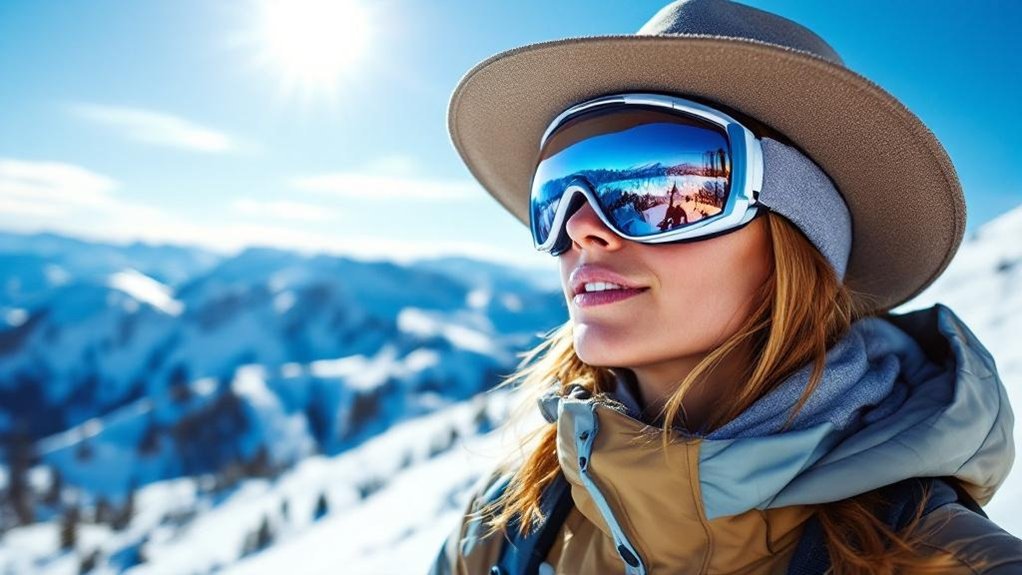
While many skiers focus on temperature and snow conditions when planning their Lake Tahoe adventures, we must emphasize that ultraviolet radiation exposure increases dramatically with elevation—presenting significant dermatological risks that contradict the perceived safety of cooler mountain temperatures. At Lake Tahoe’s 6,200 to 10,000+ foot elevations, UV radiation intensifies by 10-12% per 1,000 feet of altitude gain, creating exposure levels 60-120% stronger than sea level conditions. These altitude effects occur because the thinner atmosphere provides substantially reduced natural UV filtration. We’re dealing with dangerous UV intensity that defies intuitive temperature-based risk assessment. The atmospheric clarity at these extreme elevations allows greater UV penetration, particularly during drought periods when environmental particulates can’t provide additional protection. Lake Tahoe’s renowned water clarity creates additional UV reflection from the lake surface, amplifying the already intense high-altitude radiation exposure that skiers face.
Essential Sunscreen Application for High-Altitude Skiing
Although standard sea-level sunscreen recommendations suggest SPF 30 as adequate protection, high-altitude skiing environments demand markedly more robust dermatological defense strategies. We recommend SPF 50+ broad-spectrum formulations, as recent Vail studies demonstrate SPF 100+ greatly outperforms lower concentrations in actual skiing conditions.
Proper application techniques require one tablespoon for face and neck coverage—most skiers apply insufficient quantities, reducing protection effectiveness. We emphasize targeting high-risk zones: nose, lips, chin, and ears receive intense reflected UV from snow surfaces.
Among sunscreen types, water-resistant formulations containing zinc oxide or titanium dioxide provide ideal defense. Reapplication every two hours remains non-negotiable, regardless of product claims. We recommend portable containers for convenient mid-session touch-ups, ensuring continuous protection throughout your mountain adventures. Even during overcast conditions, up to 80% of harmful UV radiation penetrates through clouds, creating deceptive burning conditions that catch many skiers off guard.
Protecting Your Eyes From Snow Glare and UV Radiation
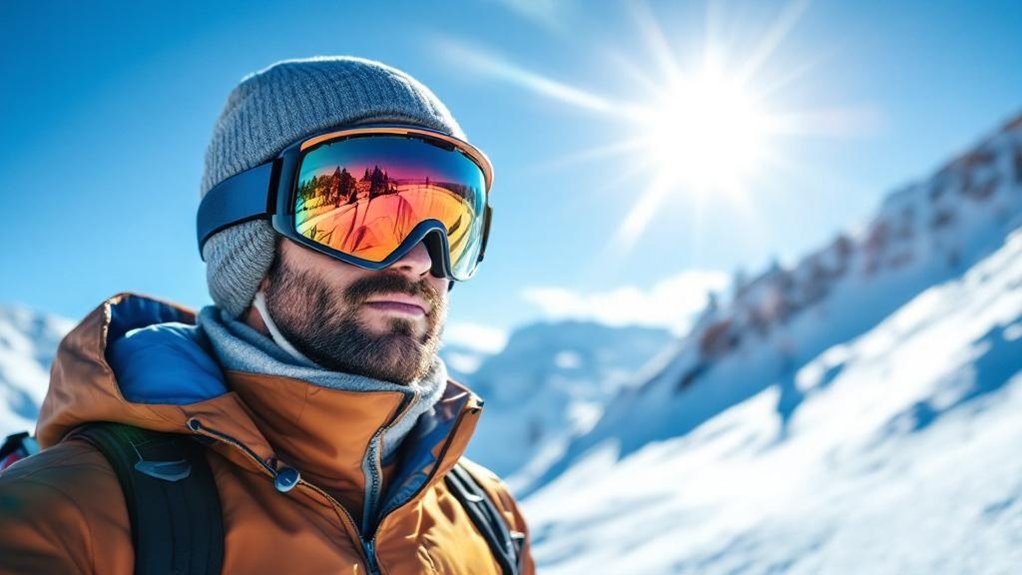
Why do experienced skiers often underestimate their eye protection needs despite understanding sunscreen importance? We’ve observed that snow’s 80% UV reflectance creates double exposure threats that many overlook. At Lake Tahoe’s 6,200-10,000+ foot elevations, UV intensity increases 4-5% per 1,000 feet, making photokeratitis prevention critical.
We recommend ANSI Z87.1 certified eyewear blocking 100% UVA/UVB radiation. Polarized lenses effectively reduce horizontal glare from reflective snow surfaces, while photochromic technology adjusts automatically to changing alpine conditions. Wraparound designs prevent peripheral UV exposure that standard sunglasses miss.
Surprisingly, expensive sunglasses do not guarantee superior UV protection compared to affordable options that meet proper certification standards.
Comprehensive Skin Defense Against Wind and Cold Exposure
When skiers ascend to Lake Tahoe’s 6,200-10,000+ foot elevations, they’re exposing their skin to a triple threat: intensified UV radiation that increases 4-5% per 1,000 feet, arid mountain air that accelerates moisture loss, and cold winds that strip away the skin’s natural protective oils. UV rays can be up to 80% stronger at higher altitudes and reflected off snow.
We recommend implementing multilayered barrier protections through strategic gear selection. Face masks, balaclavas, and ski goggles create essential windbreaks while preserving facial moisture. For moisture retention, we advocate applying emollient-rich formulations containing shea butter or dimethicone before exposure.
Our clinical approach emphasizes layering hydrating serums beneath thick moisturizers to establish multiple protective barriers. Oil-based moisturizers outperform water-based alternatives in frigid conditions. Post-skiing care should include gentle cleansing with hydrating formulations, followed by immediate moisturizer application to compromised skin barriers.
Hydration Strategies and Post-Ski Recovery Routines
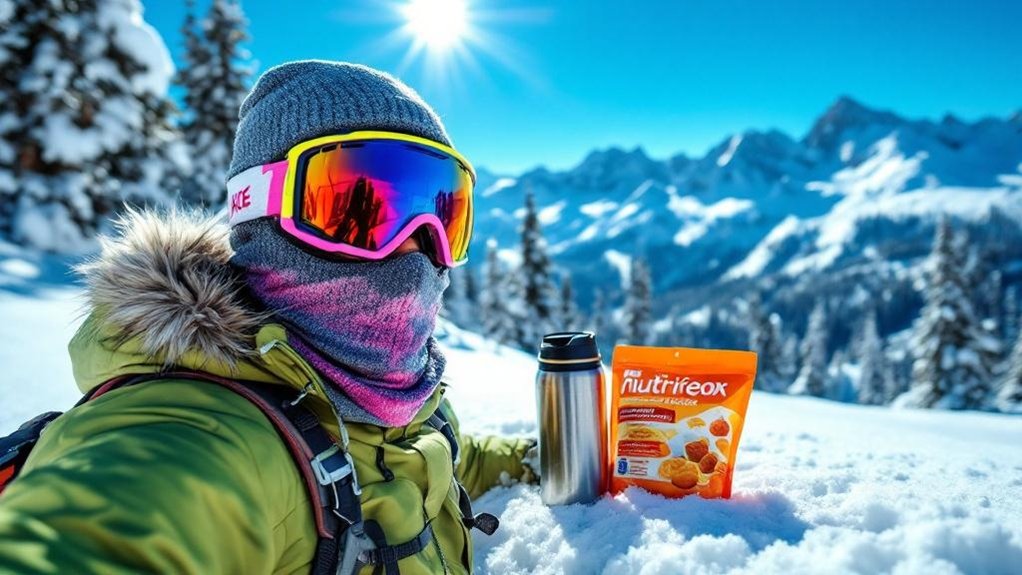
Beyond external protective measures, we must address the physiological demands that high-altitude skiing places on the body’s hydration systems. Our hydration tips include consuming 4-5 liters of water daily at elevation, representing an additional 1-1.5 liters beyond sea-level requirements. During skiing activities, we should intake 8-12 ounces of water hourly, supplemented with electrolyte solutions containing 400-700 mg/L sodium to prevent plasma volume loss.
Our recovery strategies emphasize immediate post-ski consumption of 8-16 ounces of water alongside sodium-containing foods to restore electrolyte balance. We can monitor hydration status through urine color assessment—pale yellow indicates adequate hydration levels. Carbohydrate replenishment at 6-8 g/kg body weight daily supports the accelerated metabolic demands of high-altitude exercise while maintaining ideal dermatological barrier function. Portable snacks like trail mix provide convenient nutrition during extended skiing sessions to maintain energy levels and support recovery.
Frequently Asked Questions
Can I Get Sunburned While Skiing on Cloudy Days at Lake Tahoe?
Yes, you’ll definitely burn skiing on cloudy days. We’ve seen that cloud cover permits up to 80% UV radiation penetration, while Lake Tahoe’s altitude amplifies exposure greatly, creating deceptive burning conditions.
What SPF Level Do Professional Ski Instructors Recommend for Children?
Professional ski instructors recommend SPF 50+ for children’s sunscreen at mountain elevations. We advocate this evidence-based standard because it provides superior broad-spectrum protection against intensified UV radiation reflected from snow surfaces.
How Often Should I Reapply Sunscreen During a Full Day of Skiing?
We recommend sunscreen application every 80 minutes during skiing, with increased reapplication frequency after sweating or snow contact. Water-resistant formulas require more frequent reapplication than standard two-hour intervals in high-altitude conditions.
Do Ski Helmets Provide Adequate Sun Protection for My Scalp and Ears?
Ski helmets provide excellent scalp protection with complete helmet coverage, but we recommend applying SPF 30+ sunscreen to exposed ear tops since standard helmets leave ear perimeters vulnerable to UV exposure.
Should I Use Different Sunscreen for My Face Versus Exposed Body Areas?
Yes, we recommend distinct formulations. Face sunscreen should be non-comedogenic and mineral-based to prevent goggle slippage and eye irritation. Body sunscreen can utilize thicker, more occlusive formulations for enhanced protection.
Conclusion
We’ve outlined evidence-based protocols for mitigating UV-induced photoaging and preventing erythema in Lake Tahoe’s extreme alpine environment. Implementing broad-spectrum SPF 30+ sunscreens, protective eyewear with UV400 filtration, and extensive barrier protection against environmental stressors considerably reduces your risk of acute and chronic photodamage. These dermatologically-proven strategies, combined with proper hydration and post-exposure recovery protocols, guarantee peak skin health preservation during high-altitude recreational activities. Adherence to these clinical recommendations protects against both immediate and long-term cutaneous complications.