
We recognize that transplant recipients face up to 100 times higher skin cancer risk due to immunosuppressive medications that compromise your skin’s natural UV defense mechanisms. You’ll need broad-spectrum SPF 30+ sunscreen applied every two hours, protective clothing, and avoidance of peak sun exposure between 10 AM-4 PM. Regular dermatological screenings every 3-6 months and monthly self-examinations are vital for early detection. Coordinated care between your transplant team and dermatologist guarantees effective management of your immunosuppressive therapy while addressing skin concerns thoroughly.
Key Takeaways
- Transplant patients face 100-fold higher skin cancer risk due to immunosuppressive medications compromising natural immune defenses.
- Apply broad-spectrum SPF 30+ sunscreen daily, reapplying every two hours, and avoid sun exposure between 10 AM-4 PM.
- Perform monthly self-examinations checking all body areas, documenting any changes in size, color, or texture with photographs.
- Schedule dermatological screenings every 3-6 months starting within one year post-transplant for early cancer detection and prevention.
- Coordinate all skin treatments between dermatology and transplant teams to safely manage immunosuppressive medication adjustments when needed.
Understanding Your Elevated Skin Cancer Risk After Transplantation

While transplantation offers life-saving benefits, it’s essential we comprehend that the immunosuppressive medications required to prevent organ rejection markedly elevate your skin cancer risk. More than half of solid organ transplant recipients develop skin cancer, representing up to a 100-fold elevated risk compared to the general population. The transplant implications vary markedly by cancer type: squamous cell carcinoma risk increases 100-fold, basal cell carcinoma 6-fold, and melanoma 2-5 times with more aggressive progression. Heart and lung recipients face higher incidence rates than kidney or liver recipients. Skin cancers typically emerge 3-5 years post-transplantation, with risk increasing over time. These immunosuppressive drugs also increase vulnerability to cancer-promoting viruses that further compound your risk. Understanding these statistics empowers us to implement proactive surveillance strategies together.
How Immunosuppressive Medications Affect Your Skin’s Defense System
We acknowledge that your immunosuppressive medications fundamentally compromise your skin’s ability to recognize and eliminate abnormal cells, including precancerous and malignant ones. These same medications greatly increase your photosensitivity by impairing UV defense mechanisms and reducing DNA repair capacity following sun exposure. The combination of weakened immune surveillance and enhanced UV vulnerability creates a cumulative effect that progressively elevates your skin cancer risk over time. Research has demonstrated a 50% increased risk of developing melanoma in patients taking eight or more immunosuppressive prescriptions.
Weakened Cancer Recognition Ability
When immunosuppressive medications enter your system, they fundamentally disrupt the intricate network of immune cells and signaling pathways that normally patrol your skin for cancerous transformations. We see this cancer surveillance breakdown occurring through multiple mechanisms that directly impact your body’s ability to recognize threatening cellular changes.
Your T-cells, which typically detect and eliminate abnormal skin cells, become greatly compromised. Natural killer cells lose their capacity for early recognition of malignant transformations. Meanwhile, dendritic cells can’t effectively present tumor antigens, creating gaps in your immune defense system.
This immune dysfunction allows precancerous lesions to develop unchecked, leading to accelerated progression from dysplastic cells to invasive carcinomas. We observe larger tumor sizes at detection and more aggressive histological features in our immunosuppressed patients. Additionally, these medications diminish the skin’s ability to counteract the damaging effects of ultraviolet light, further compounding the cancer risk.
Increased Sun Sensitivity Risk
Beyond the compromised immune surveillance we’ve discussed, your immunosuppressive medications create a secondary vulnerability by dramatically amplifying your skin’s sensitivity to ultraviolet radiation. Drugs like azathioprine and voriconazole directly interact with UV light at the molecular level, generating phototoxic compounds and free radicals that cause cellular damage. These medication interactions fundamentally alter how your skin responds to sun exposure, reducing natural antioxidant defenses while increasing UV-induced DNA mutations in keratinocytes.
We’ve observed that azathioprine functions as a UV-sensitizing agent, making your skin burn faster and more severely than before transplantation. The synergistic damage between UV radiation and specific immunosuppressant pathways accelerates sunburn cell formation in your epidermis, requiring SPF 50+ broad-spectrum protection year-round to maintain skin health.
Patients on immunosuppressive medications face a 65 times higher risk of developing non-melanoma skin cancers, particularly squamous cell carcinoma, compared to the general population.
Cumulative Damage Over Time
The heightened sensitivity you’re experiencing represents just the immediate manifestation of a far more concerning pattern. We’re witnessing cumulative risk progression that intensifies with each passing year of immunosuppression. Your skin’s immune surveillance system undergoes progressive impairment, with 10-45% of patients developing cancerous lesions within ten years post-transplant. This escalates to 80% prevalence after twenty years of continuous therapy.
The skin changes we observe include extensive actinic field damage from coalescing precancerous lesions and deteriorating barrier integrity. Your T lymphocytes, Langerhans cells, and natural killer cells experience persistent suppression, preventing elimination of malignant formations. DNA damage accumulates as your immune system’s clearance mechanisms weaken. Among the various immunosuppressive agents, certain medications like sirolimus, infliximab, and azathioprine demonstrate particularly elevated reporting odds ratios for skin cancer development. We’re monitoring these progressive alterations closely, understanding that your risk continues accumulating throughout your transplant journey.
Essential Daily Sun Protection Practices for Transplant Recipients
Since transplant recipients face a dramatically elevated risk of developing skin malignancies—up to 100 times higher than the general population—we can’t overstate the critical importance of detailed daily photoprotection. Your heightened sun sensitivity demands extensive protection strategies that go beyond occasional sunscreen application.
We recommend selecting a broad-spectrum sunscreen formulation with minimum SPF 30, though SPF 50+ provides superior protection for your high-risk status. Apply 1-2 fluid ounces thirty minutes before exposure, focusing on frequently missed areas like lower cheeks, lips, and neck. Reapplication every two hours remains non-negotiable. Female patients consistently demonstrate higher sunscreen compliance rates compared to their male counterparts following transplantation.
Protective clothing serves as your first defense line. Choose close-woven fabrics, long sleeves, and wide-brimmed hats with three-inch minimums. Avoid midday exposure between 10 AM and 4 PM when UV radiation peaks.
Available Treatment Options When Skin Cancer Develops
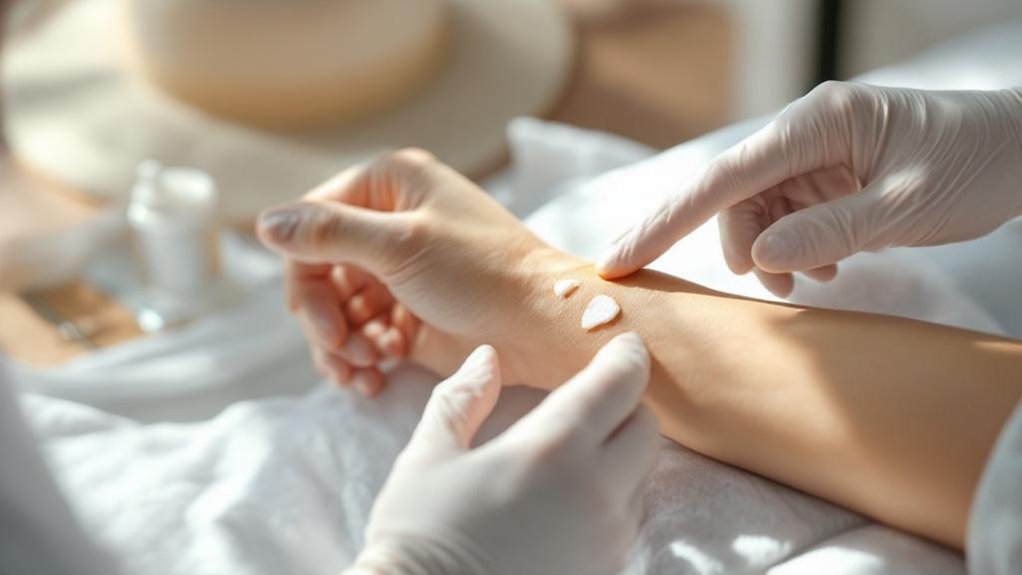
Despite thorough photoprotection measures, transplant recipients may still develop cutaneous malignancies requiring immediate intervention. We offer extensive treatment options tailored to your unique immunosuppressed status. Surgical excision remains our cornerstone approach, with Mohs micrographic surgery providing ideal tissue preservation while guaranteeing complete tumor removal. For precancerous lesions, we utilize topical therapies including 5-fluorouracil, imiquimod, and photodynamic therapy combined with ablative fractional laser treatments.
Advanced cases require specialized cancer therapies. Cemiplimab demonstrates remarkable efficacy for cutaneous squamous cell carcinoma, while pembrolizumab achieves nearly 90% tumor reduction in desmoplastic melanoma. We carefully balance immunotherapy benefits against graft rejection risks, as combination therapies increase both cure rates and rejection potential. Our multidisciplinary team guarantees aggressive margin control and frequent surveillance, recognizing your accelerated tumor progression risk. Given that skin cancers often develop earlier and are multifocal in transplant recipients, prompt intervention is essential to prevent invasive progression.
Working With Your Medical Team to Adjust Immunosuppressive Therapy
Managing your immunosuppressive therapy requires continuous collaboration between you, your dermatologist, and your transplant team to balance skin cancer prevention with graft protection. We recognize that immunosuppression adjustments can feel overwhelming, but systematic coordination guarantees your safety. Your transplant center must approve all medication consultations before implementing changes, as drug interactions greatly affect your treatment outcomes. We’ll monitor your blood trough concentrations and complete blood counts to guide precise dosing decisions. When skin cancer develops, we may recommend gradual dose reductions using small increments to avoid concentration fluctuations. Your risk profile determines whether we can safely minimize doses while maintaining graft function. Since immunosuppressive drugs can cause significant side effects including nephrotoxicity and other complications, careful monitoring becomes even more critical during dose adjustments. This collaborative approach protects both your transplant and reduces cancer recurrence risk through evidence-based protocols.
Regular Dermatological Screening and Monitoring Schedule

Regular dermatological surveillance forms the cornerstone of skin cancer prevention for transplant recipients, requiring systematic screening protocols that begin before transplantation and continue throughout your lifetime. We recommend pre-transplant evaluation within one month of referral, establishing baseline skin assessment before immunosuppression begins.
Post-transplant screening frequency depends on risk stratification using standardized assessment tools. High-risk patients—including thoracic organ recipients, males, and those over 50—require full-body examinations every 3-6 months. Most Caucasian, Asian, and Hispanic patients need initial screening within five years post-transplant, with high-risk Caucasians requiring evaluation within two years.
Those with prior skin cancer history or extensive sun damage require more frequent monitoring every 3-6 months, as transplant recipients experience up to 65 times greater skin cancer incidence than the general population. Patients with active concerning growths should receive urgent evaluation within 1–2 weeks to ensure timely diagnosis and treatment.
Performing Effective Self-Examinations at Home
While professional dermatological surveillance remains essential, monthly self-examinations serve as your first line of defense in detecting suspicious lesions between scheduled appointments. We recommend establishing consistent examination frequency on the same date each month to develop protective habits early post-transplant.
Effective self examination techniques require a well-lit, warm environment with both full-length and handheld mirrors. We’ll systematically examine from head to toe, using a comb to part hair for scalp assessment. Critical areas include neck, chest, under breasts, groin, and foot soles—regions often overlooked yet high-risk.
Family assistance proves invaluable for posterior examination, as back visibility limitations compromise thoroughness. Document suspicious findings photographically with dates, noting any lesions exceeding 6mm, exhibiting irregular borders, color variations, bleeding, or causing unexplained pain. Remember that transplant patients over age 50 face heightened skin cancer risks and require particularly vigilant monitoring.
Coordinating Care Between Your Transplant and Dermatology Specialists

Because transplant recipients face significantly elevated skin cancer risks, establishing seamless communication between your transplant and dermatology teams becomes essential for ideal outcomes. We recommend scheduling your first dermatology consultation within one year post-transplant, with annual full-body skin exams thereafter. If you’ve had previous skin cancers, bi-annual screenings become necessary.
Effective multidisciplinary collaboration requires your dermatologist to immediately notify your transplant team about any skin cancer diagnoses. This communication enables your transplant physicians to contemplate adjusting immunosuppressive medications when appropriate. We encourage you to facilitate information sharing between both specialties, ensuring coordinated medication management.
Patient education strengthens this partnership—understanding when to contact each specialist empowers you to advocate for timely interventions. High-Risk Transplant Clinics offer integrated care models that streamline this coordination process. Early consultation within the first 24-48 hours of any concerning skin changes is crucial for proper diagnosis before treatments alter lesion appearance.
Frequently Asked Questions
Can I Use Makeup or Skincare Products While on Immunosuppressants?
Yes, you can use makeup and skincare products, but we recommend selecting formulations without parabens, fragrances, or formaldehyde-releasing preservatives. Makeup safety requires avoiding ingredients under 500 Da molecular weight for immunosuppressed patients.
How Do I Protect My Scalp if I Have Thinning Hair?
We recommend extensive scalp care using mineral-based sunscreens with SPF 30-50 daily for hair protection. Apply fragrance-free moisturizers, wear breathable hats, and maintain gentle cleansing routines to safeguard your vulnerable scalp tissue effectively.
Are There Specific Vitamins That Help Transplant Patients’ Skin Health?
We recommend specific vitamin benefits including vitamin D supplementation, nicotinamide for DNA repair, and retinoids like acitretin. These essential skin nutrients help counteract immunosuppression effects and reduce cancer risk in our transplant community.
What Should I Do if I Forget Sunscreen Application?
We recommend immediately seeking shade and wearing protective clothing as sunscreen alternatives. Set reapplication reminders on your phone to prevent future lapses, as consistent sun protection remains critical for your immunosuppressed skin health.
Can Swimming Pools or Hot Tubs Increase My Skin Cancer Risk?
Pool chemicals don’t directly increase cancer risk, but we recommend prioritizing pool safety with adequate sun protection and consistent skin monitoring since UV reflection from water intensifies your already heightened photosensitivity as an immunosuppressed patient.
Conclusion
We’ve outlined evidence-based strategies that’ll considerably reduce your skin cancer risk while maintaining transplant function. Your immunosuppressed status requires vigilant photoprotection, systematic dermatological surveillance, and coordinated care between specialties. We can’t overstate the importance of daily broad-spectrum SPF application, monthly self-examinations, and adherence to your prescribed screening intervals. These interventions, when implemented consistently, demonstrate measurable reductions in cutaneous malignancy incidence among transplant recipients on chronic immunosuppressive therapy.