
Posted by: Skin And Cancer Institute in Medical Dermatology
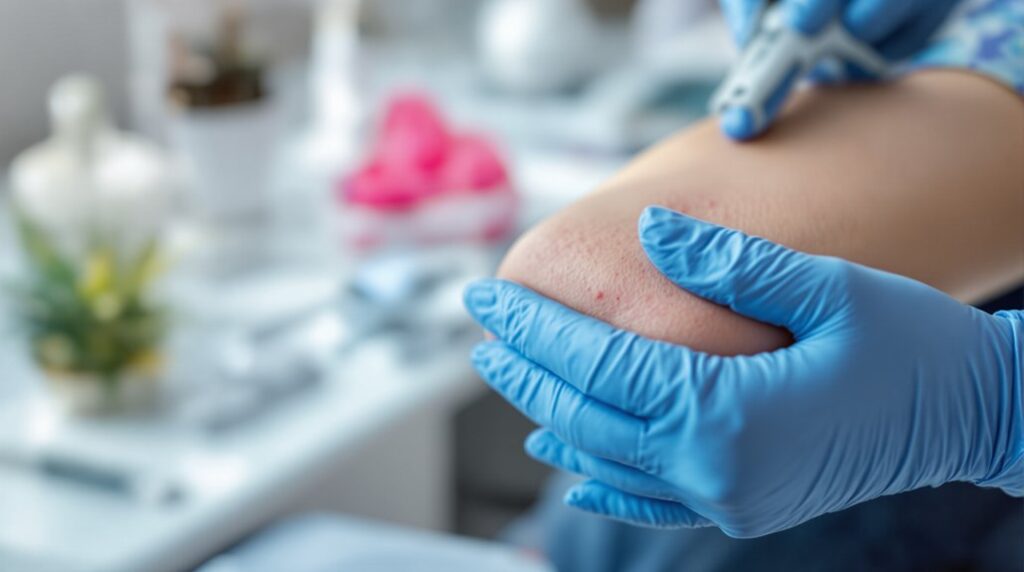
We diagnose dermatillomania by identifying recurrent skin picking with characteristic monomorphic, symmetric lesions that distinguish it from primary dermatoses. Immediate management involves wound care protocols, antiseptic application, and infection monitoring, while long-term treatment combines topical interventions like hydroquinone for pigmentation and silicone therapy for scarring. We recommend behavioral modifications including habit reversal training alongside first-line SSRIs or N-acetylcysteine. Coordinated care with mental health professionals optimizes outcomes through extensive treatment strategies that address both dermatological manifestations and underlying compulsive behaviors.
Key Takeaways
- Dermatillomania affects 2-5% of the population with onset around age 13.5, requiring early identification and assessment for comorbid anxiety disorders.
- Self-inflicted lesions show monomorphic, symmetric patterns primarily on face, arms, and hands, distinguishing them from medical dermatoses.
- Immediate wound care includes gentle cleansing, antiseptics, sterile dressings, and physical barriers like gloves to prevent further trauma.
- Scar management utilizes silicone therapy, topical steroids, and hydroquinone with tretinoin for pigmentation correction plus daily SPF 30+.
- Treatment combines behavioral interventions reducing trauma by 50-75% with SSRIs as first-line medications requiring 3-4 month trials.
Recognizing Clinical Signs and Diagnostic Criteria for Dermatillomania
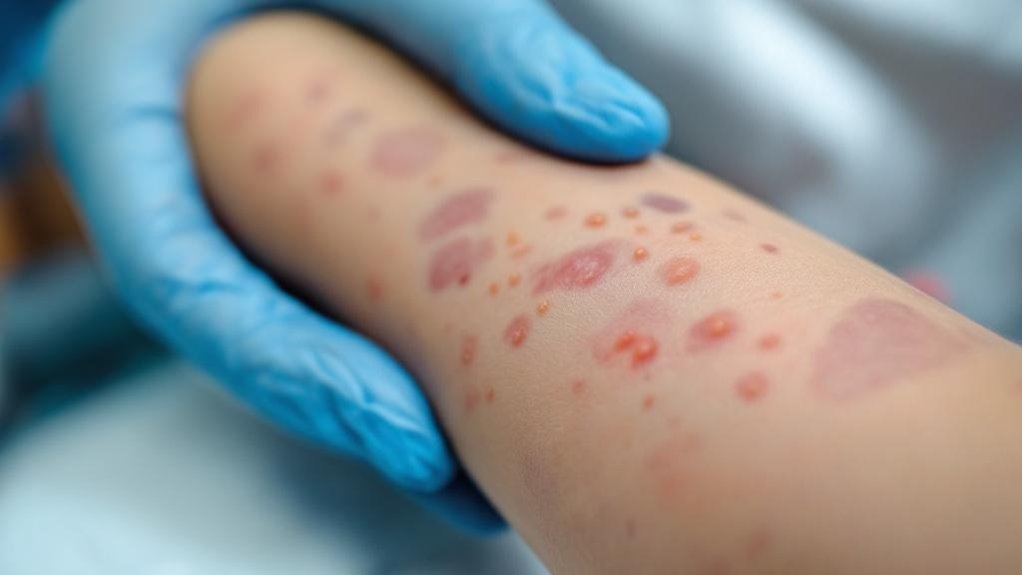
Dermatillomania, formally classified as Excoriation Disorder in the DSM-5, presents with specific diagnostic criteria that we must systematically evaluate during clinical assessment. Our diagnostic interviews should identify recurrent skin picking resulting in visible lesions, repeated attempts to reduce the behavior, and clinically significant distress or functional impairment. We’ll observe characteristic patterns affecting the face, arms, and hands, though multiple body sites are frequently involved. During symptom assessment, we must rule out substance-induced behaviors and other psychiatric conditions. The average onset occurs around 13.5 years, with awareness levels varying from automatic picking during distractions to sustained episodes. Approximately 2-5% of the general population experiences clinically significant symptoms, making accurate recognition essential for our practice. Clinical evaluation should also assess for common comorbid conditions such as anxiety disorders and obsessive-compulsive disorder that frequently co-occur with dermatillomania.
Differentiating Self-Inflicted Skin Damage From Medical Conditions
When we encounter patients presenting with skin lesions, we must systematically evaluate characteristic picking patterns to distinguish self-inflicted damage from primary dermatological conditions. Self-induced lesions typically demonstrate monomorphic presentations with discrete, eroded papules distributed symmetrically across easily accessible body sites, contrasting with the polymorphic patterns seen in medical dermatoses. We’ll examine how underlying skin conditions may predispose patients to picking behaviors while simultaneously serving as differential diagnostic considerations that require targeted laboratory investigations. Episodes are often triggered by stress, which can help clinicians identify potential environmental or psychological factors contributing to the picking behavior.
Characteristic Picking Patterns
Accurate differentiation between self-inflicted skin damage and medical dermatological conditions requires careful examination of behavioral patterns and lesion characteristics specific to skin picking disorder. We’ll observe distinct automatic picking during sedentary activities versus focused picking triggered by perceived skin imperfections. Temporal patterns reveal episodic frequency averaging 2.57 episodes daily, typically lasting 10-30 minutes without circadian distribution. Anatomical sites mainly include the face (55%), arms (28%), and hands (18%), correlating with accessibility rather than dermatomal patterns. Behavioral triggers encompass stress, anxiety, and boredom, with picking serving as maladaptive coping mechanisms. Tool use occurs in 30-40% of cases, demonstrating intentional manipulation. Individual variability in presentation requires thorough assessment of picking behaviors, duration, and anatomical distribution to establish accurate diagnosis. The disorder demonstrates a female predominance with approximately 55% of diagnosed cases affecting women, which may influence presentation patterns and clinical assessment considerations.
Underlying Skin Conditions
Although skin picking disorder presents with characteristic behavioral patterns, we must systematically exclude underlying dermatological conditions that can mimic or coexist with self-inflicted lesions. Our differential diagnosis includes autoimmune disorders like bullous pemphigoid and discoid lupus erythematosus, which demonstrate distinct histological features. Infectious conditions such as scabies, impetigo, and fungal infections require specific testing protocols to distinguish from self-inflicted damage.
We evaluate metabolic causes including hepatic disease, renal failure, and thyroid dysfunction that generate systemic symptoms and pruritus triggers. Connective tissue disorders like lichen planopilaris show perifollicular inflammation unlike picking patterns. Pharmacological effects from methamphetamines, opioids, and SSRIs can induce formication or pruritus, complicating diagnosis. Primary psychiatric conditions including trichotillomania and dermatitis artefacta must be considered in the differential, as these disorders involve self-induced cutaneous findings with similar presentation patterns. Thorough assessment guarantees we’re treating the correct underlying pathophysiology rather than assuming purely behavioral etiology.
Physical Examination Techniques for Identifying Picking Patterns
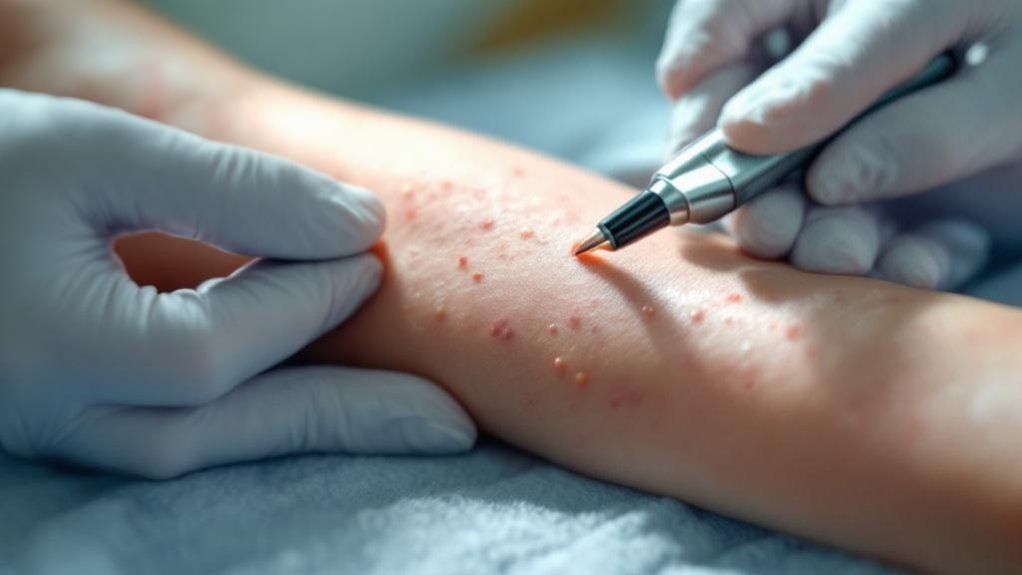
Systematic documentation forms the cornerstone of identifying skin picking disorder through physical examination. We’ll map lesion distribution across body regions, noting the characteristic 12.3% frequency on chest areas and 11.0% distribution across shoulders, scalp, and lips. Our lesion mapping reveals linear excoriations from fingernail manipulation and multiple healing stages indicating recurrent behavior. We examine areas concealed by clothing and assess for camouflage techniques like makeup or strategic covering.
Identifying picking triggers requires correlating temporal patterns with specific body locations. We document characteristic concentric patterns around initial blemishes and note the absence of expected inflammatory responses. Through systematic differentiation techniques, we distinguish excoriation disorder from similar presentations, ensuring accurate diagnosis for our dermatology colleagues treating these complex cases. During examination, we assess for secondary infections that commonly develop from repeated manipulation of affected skin areas.
Managing Skin Damage and Preventing Secondary Infections
When patients present with active skin picking wounds, we’ll implement immediate wound care protocols to minimize tissue damage and prevent bacterial colonization. Our approach begins with gentle cleansing using mild soap and water, followed by antiseptic application to reduce microbial load on compromised surfaces. We’ll apply sterile dressings and utilize pressure techniques to control bleeding from damaged capillaries.
For infection prevention, we monitor for clinical signs including increased erythema, edema, warmth, and purulent discharge. When localized treatments prove insufficient, systemic antibiotic therapy becomes necessary. We recommend physical barriers like specialized dressings and gloves to protect healing areas from repeated trauma. Since approximately 76% of individuals may engage in skin picking without conscious awareness, physical barriers serve a crucial role in interrupting unconscious picking behaviors during the healing process. Dermatological consultation is warranted when wounds fail to improve within seven to ten days, ensuring ideal tissue restoration outcomes.
Topical Treatments for Scarring and Hyperpigmentation
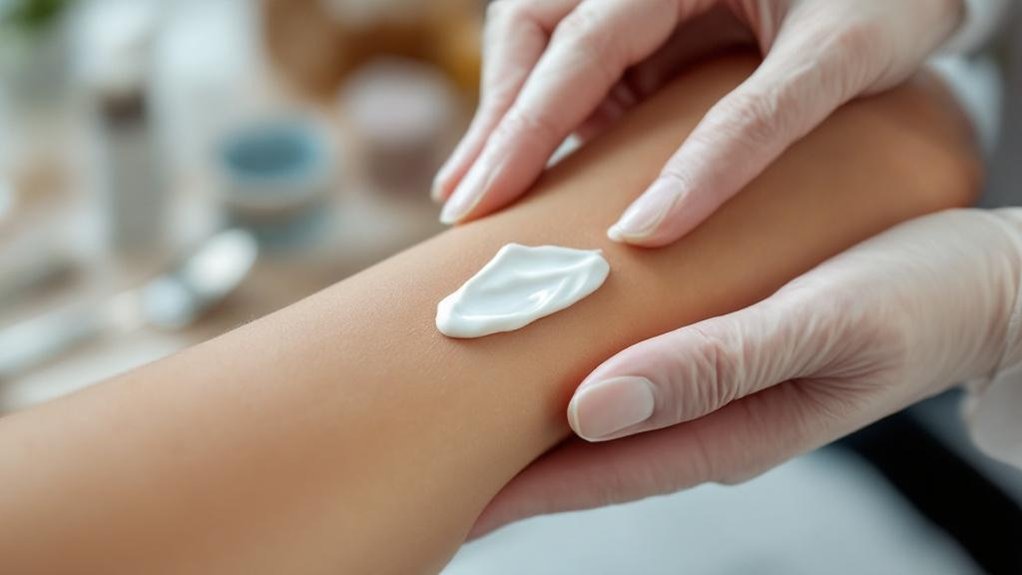
When treating the sequelae of skin picking disorder, we prioritize evidence-based topical interventions that target both atrophic scarring and post-inflammatory hyperpigmentation through distinct mechanisms. Our scar reduction protocols incorporate retinoids for enhanced epidermal renewal, while pigmentation correction utilizes hydroquinone 2-4% as the gold standard, often combined with alternative agents like tranexamic acid or niacinamide for patients with contraindications. We implement healing acceleration treatments including antioxidant formulations and combination therapies that address multiple pathophysiologic processes simultaneously to optimize clinical outcomes. Azelaic acid serves as an effective tyrosinase inhibitor with antiproliferative effects on melanocytes, offering excellent tolerability as an alternative or adjunctive treatment to hydroquinone.
Scar Reduction Options
Five primary categories of topical interventions demonstrate clinical efficacy in managing scarring and hyperpigmentation resulting from skin picking disorder. We utilize silicone therapy options as first-line scar management techniques, including gel-impregnated sheets and topical formulations that create protective barriers promoting scar flattening. Intralesional steroid injections administered every two to six weeks effectively address hypertrophic and keloidal formations, while potent topical steroids reduce inflammation in erythematous lesions. Occlusive dressing techniques incorporating hydrocolloid patches maintain ideal healing environments and prevent re-picking behaviors. We recommend moist wound healing products like petroleum jelly and antibacterial ointments to accelerate epithelialization while minimizing scab formation. Protective barrier methods, including compression bandages and acne patches, provide therapeutic pressure while blocking access to healing tissue, supporting your recovery journey. For hyperpigmented scarring, specialized skin lightening creams containing hydroquinone with isotretinoin can effectively reduce discoloration when used under proper dermatological supervision.
Pigmentation Correction Methods
Beyond addressing the textural aspects of scars, we focus on correcting the pigmentary changes that frequently accompany skin picking disorder through targeted topical interventions. Hydroquinone remains our gold standard pigment inhibitor, typically prescribed in 2-4% concentrations for ideal treatment efficacy. We combine this with retinoids like tretinoin to accelerate cellular turnover and reduce post-inflammatory hyperpigmentation. Azelaic acid offers dual benefits, simultaneously addressing residual acne while lightening darkened areas. For thorough care, we often recommend Triluma cream, which combines hydroquinone, tretinoin, and a mild corticosteroid. We also incorporate vitamin C serums into treatment protocols for their antioxidant properties and ability to inhibit melanin production while supporting overall skin healing. Consistent application for 3-6 months produces significant improvement, though we emphasize that strict daily SPF 30+ sunscreen use remains essential to prevent further UV-induced pigmentation during treatment.
Healing Acceleration Treatments
As healing progresses from the initial inflammatory phase, we implement targeted topical interventions that accelerate tissue regeneration while simultaneously addressing scarring and hyperpigmentation concerns. Our all-encompassing approach combines gentle cleansing protocols with non-comedogenic, fragrance-free moisturizers that enhance skin barrier restoration. We prescribe topical antibiotics for severe damage cases, preventing bacterial colonization while supporting wound healing in compromised areas. pH-balanced formulations maintain ideal healing environments, and we’re exploring biomaterial-based approaches that create physical barriers during skin regeneration phases. Since dermatillomania commonly affects the face, arms, and hands, treatment protocols must be adapted to address the unique healing requirements and visibility concerns of these frequently targeted areas. Broad-spectrum sunscreen with SPF 30+ becomes essential once healing completes, as UV protection prevents discoloration formation and accelerates scar fading. Each intervention requires medical supervision to guarantee appropriate selection and monitoring throughout recovery phases.
Behavioral Modification Strategies to Reduce Skin Trauma
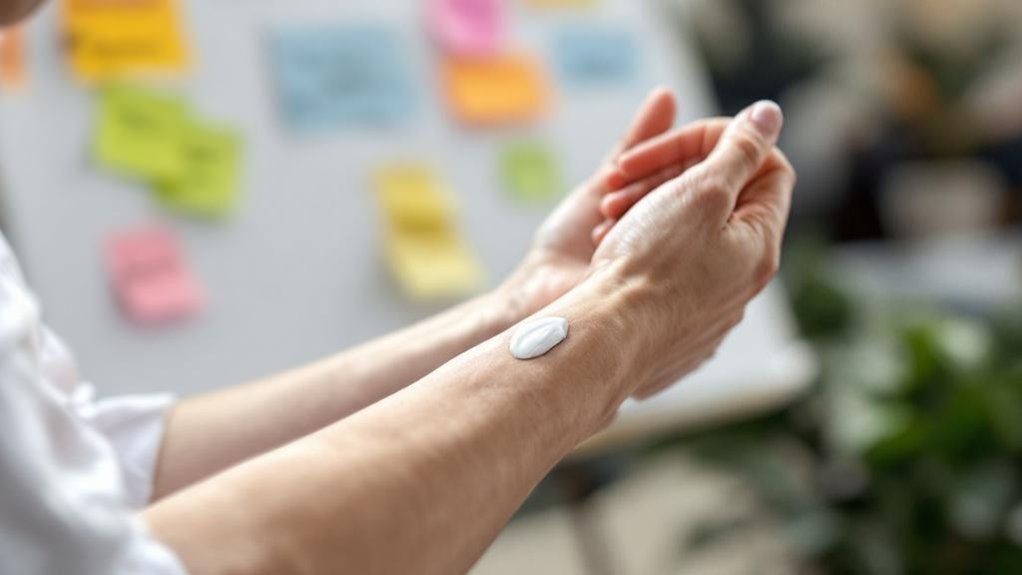
When patients struggle with skin picking disorder, we’ve found that implementing targeted behavioral modification strategies consistently reduces tissue trauma by 50-75% within 8-12 weeks of treatment initiation. Our approach centers on habit reversal training, where patients maintain self-monitoring diaries to establish baseline picking frequency. We observe that 80% of picking occurs unconsciously during routine activities. Competing response techniques require physically incompatible actions like fist-clenching for 1-2 minutes during urge cycles, creating behavioral interruption.
We recommend thorough environmental modifications including mirror removal, which decreases picking episodes by 60% in high-risk areas. Physical barriers like gloves reduce skin access by 70% during vulnerable periods. Additionally, we integrate emotional regulation skills using dialectical behavior therapy techniques and mindfulness-based urge management to address underlying triggers driving compulsive behaviors. Treatment success often correlates with addressing the cycle of relief and shame that reinforces the picking behavior.
Pharmacological Options and Treatment Combinations
While behavioral interventions form our treatment foundation, we’ve observed that pharmacological approaches often prove essential for achieving sustained remission in moderate to severe skin picking disorder cases. SSRIs represent our first-line pharmacological options, with fluoxetine, citalopram, and sertraline demonstrating consistent efficacy across multiple studies. We’ve found N-acetylcysteine and memantine particularly effective as alternative agents when SSRIs prove insufficient. Treatment combinations targeting both serotonin and dopamine pathways show remarkable promise—fluoxetine paired with paliperidone has achieved near-complete symptom resolution in our experience. We typically recommend minimum 3-4 month trials before evaluating medication efficacy, using gradual titration protocols to minimize adverse effects while maximizing therapeutic benefit for our patients. The rising prevalence of this condition has made comprehensive treatment approaches increasingly important for dermatology practices.
Coordinating Care With Mental Health Professionals

Since skin picking disorder manifests through both dermatological symptoms and underlying psychological mechanisms, we’ve established extensive referral protocols that guarantee patients receive coordinated care across specialties. Our collaborative approaches integrate dermatological expertise with mental health professionals trained in Habit Reversal Training and body-focused repetitive behaviors. We maintain structured documentation systems that capture skin condition progression alongside behavioral patterns, enabling multidisciplinary teams to develop unified treatment strategies.
Regular case conferences address physical manifestations while identifying psychological triggers through shared terminology and confidential clinical exchanges. Our integrated care plans synchronize skin healing timelines with behavioral modification strategies, ensuring consistent patient education that normalizes dermatillomania experiences. Given that excoriation disorder affects an estimated 1.4% of the population with predominant onset during adolescence, early identification protocols help streamline appropriate referrals. Joint outcome monitoring systems track both dermatological recovery and picking frequency reduction, facilitating coordinated follow-up schedules that support thorough treatment adherence.
Frequently Asked Questions
How Long Does It Typically Take to See Improvement in Skin Picking Behavior?
We typically observe initial improvement within 2-4 weeks of treatment initiation. Behavioral therapy combined with systematic tracking progress shows measurable reduction in picking behaviors by 6-8 weeks in most patients.
Can Dermatillomania Be Completely Cured or Is It a Lifelong Condition?
Dermatillomania is typically a lifelong condition requiring ongoing long-term management rather than complete cure. We’ve found that sustained remission is achievable through thorough treatment combining pharmacological interventions with psychological support and behavioral therapy protocols.
What Should I Tell Family Members About My Skin Picking Disorder?
We recommend explaining dermatillomania’s neurobiological basis as a medical condition requiring clinical intervention. Effective communication tips include non-judgmental language during calm moments, while support strategies involve collaborative trigger identification and establishing appropriate boundaries.
Are There Specific Skincare Products That Make Picking Urges Worse?
Yes, certain skincare ingredients create picking triggers. We’ve identified that alcohol-based formulations, physical exfoliants, and products causing dryness or flaking greatly worsen dermatillomania symptoms by increasing tactile stimulation and sensory discomfort.
How Much Does Treatment for Dermatillomania Typically Cost Without Insurance Coverage?
Therapy costs for dermatillomania treatment options typically range $100-255 per session without insurance. Complete treatment programs can exceed $1,500, though we recognize affordable alternatives like online platforms help make care accessible.
Conclusion
We’ve outlined evidence-based approaches for managing dermatillomania’s complex clinical presentation. Through systematic diagnostic assessment, targeted wound care, and coordinated multidisciplinary intervention, we can effectively address both dermatological sequelae and underlying compulsive behaviors. Success requires integrating topical therapeutics with behavioral modification techniques and psychiatric collaboration. Our clinical experience demonstrates that extensive treatment protocols greatly improve patient outcomes, reduce infection risk, and minimize long-term scarring. Early intervention remains essential for ideal prognosis and functional restoration.