
Posted by: Skin And Cancer Institute in Medical Dermatology
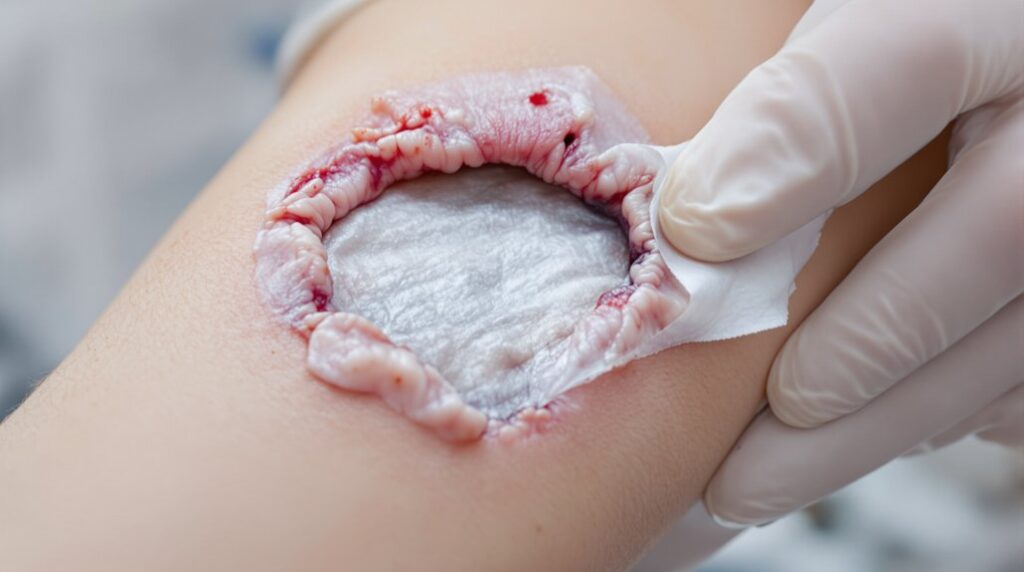
We’ve found that treating pyoderma gangrenosum requires immediate systemic immunosuppression, typically corticosteroids at 0.5-1 mg/kg/day, which achieves clinical response in 50% of cases. You’ll need specialized wound care that avoids debridement to prevent pathergy—the phenomenon where trauma worsens ulceration. We combine high-potency topical corticosteroids like clobetasol 0.05% with multimodal pain management protocols. Since approximately half of patients have underlying inflammatory conditions, we coordinate care with gastroenterology and rheumatology specialists. Our thorough approach addresses the complex mechanisms driving this challenging condition.
Key Takeaways
- Systemic corticosteroids (0.5-1 mg/kg/day) are first-line treatment, achieving clinical response in up to 50% of cases.
- Avoid aggressive wound debridement as trauma can trigger pathergy and worsen ulceration in pyoderma gangrenosum.
- High-potency topical corticosteroids like clobetasol 0.05% effectively treat small ulcers under 4 cm² as monotherapy.
- Multimodal pain management including topical morphine and anti-neuropathic medications is essential for patient comfort.
- Screen and treat underlying conditions like inflammatory bowel disease present in approximately 50% of patients.
Systemic Immunosuppressive Therapy as First-Line Treatment
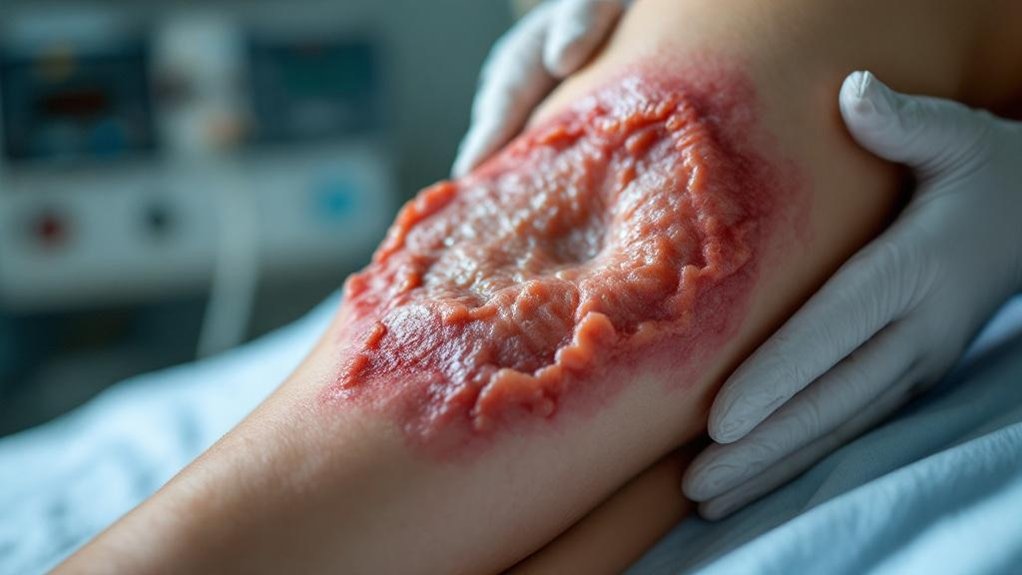
When treating pyoderma gangrenosum, we prioritize systemic immunosuppressive therapy as the cornerstone of first-line management. Corticosteroids remain our most extensively studied option, with 0.5–1 mg/kg/day inducing clinical response in up to 50% of cases. We often consider cyclosporine alongside corticosteroids as primary treatment, particularly for rapidly progressive disease where parenteral administration proves more effective than oral therapy.
Recent evidence supports biologics as increasingly viable first-line alternatives, especially when you’re managing concurrent inflammatory conditions. Infliximab demonstrates superior outcomes compared to placebo, while IL-23 inhibitors show promise across all subtypes. Mycophenolate mofetil represents another effective immunosuppressive option, with studies showing complete healing in four out of seven patients treated for at least two months.
Understanding treatment timelines helps us set realistic expectations—approximately 47% of patients achieve complete healing at six months. We’re finding combination therapy often surpasses sequential approaches for best outcomes.
Topical Corticosteroids and Local Treatment Approaches
While systemic therapy forms our treatment foundation, we recognize that topical corticosteroids offer valuable therapeutic benefits for appropriately selected cases. We recommend high-potency options like clobetasol 0.05% or calcineurin inhibitors such as tacrolimus 0.03% for small ulcers measuring 4 cm² or less. These topical applications work best during early intervention and help reduce our reliance on systemic medications. Clinical studies demonstrate that the STOPGAP trial showed a 42% complete healing rate at 6 months with clobetasol in patients.
Our dressing techniques focus on maintaining ideal moisture balance while preventing pathergy. We utilize non-adherent dressings, extra-thin hydrocolloids, and petrolatum-impregnated gauze to minimize trauma during changes. The TIME protocol guides our structured approach—addressing tissue viability, infection control, moisture optimization, and epithelialization. While evidence remains limited, approximately 27% of cases benefit from topical corticosteroids as reasonable monotherapy for localized lesions.
Specialized Wound Care Without Debridement
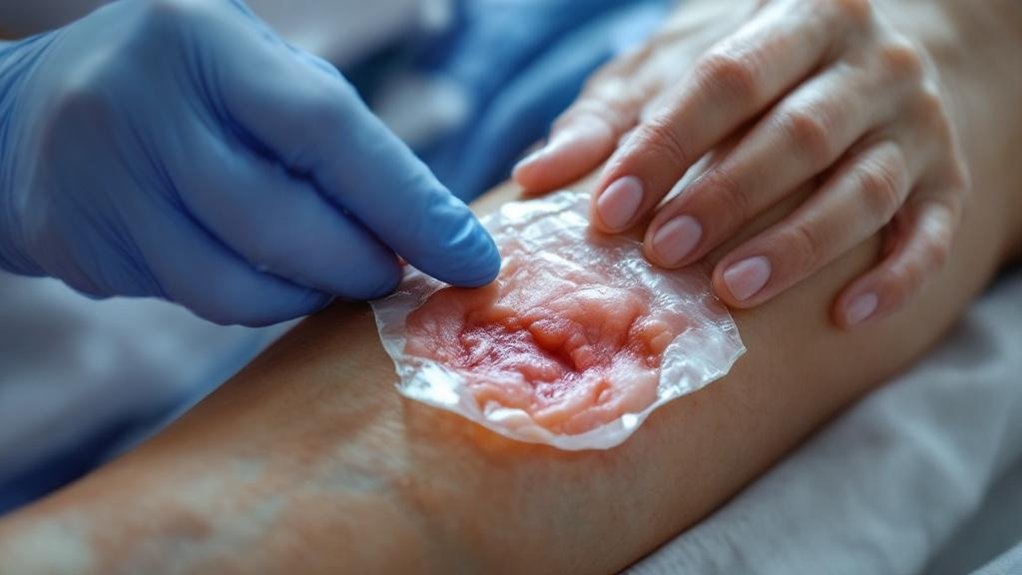
Although conventional wound care emphasizes aggressive debridement, pyoderma gangrenosum demands a fundamentally different approach that prioritizes pathergy prevention above traditional tissue removal protocols. We’ve learned that gentle cleansing techniques protect against pathergy reactions that can dramatically worsen PG ulcers. Our wound care strategy focuses on moisture balance maintenance, using nonadherent dressings and foam materials that minimize trauma during removal.
We select dressing types based on specific wound characteristics while avoiding tissue manipulation. Compression therapy may reduce inflammation, though evidence remains limited. We’ve modified traditional TIME principles to emphasize moisture management over debridement. This specialized approach requires continuous assessment of moisture levels and exudate control, ensuring ideal keratinocyte migration while preventing iatrogenic wound expansion. Preanalgesia with non-opiate medications can significantly improve patient comfort during dressing changes and wound assessments.
Comprehensive Pain Management Protocols
Beyond wound care considerations, we’ve established that effective pain management represents one of our most challenging clinical priorities in pyoderma gangrenosum treatment. We implement multimodal analgesia strategies following WHO’s three-stage framework, progressing from NSAIDs for mild pain to opioid combinations for severe cases. Our pain assessment protocols incorporate both topical morphine applications—providing up to twelve hours of localized relief—and systemic approaches tailored to individual patient needs.
We’ve observed that topical treatments dramatically reduce oral analgesic requests while improving sleep patterns and nutritional intake. For complex cases, we coordinate with specialized pain clinics, utilizing combination therapies that allow lower individual medication doses while maintaining efficacy. Anti-neuropathic medications prove essential for patients requiring compression therapy, ensuring treatment tolerance without symptom exacerbation.
Given that pyoderma gangrenosum requires a multidisciplinary approach with dermatologist coordination, our pain management protocols must align with comprehensive treatment planning that addresses both inflammatory control and wound healing optimization.
Managing Underlying Conditions and Preventing Pathergy
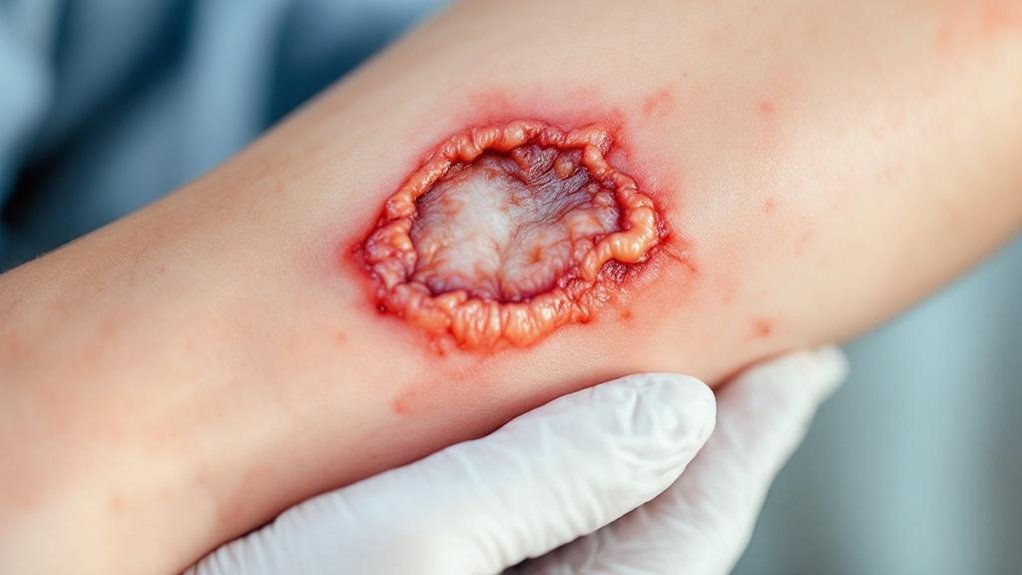
Since approximately 50% of pyoderma gangrenosum patients present with underlying systemic conditions, we’ve developed extensive screening protocols that simultaneously address both the cutaneous manifestations and associated inflammatory disorders. Our multidisciplinary approach examines comorbidity impact on treatment outcomes, recognizing that conditions like Crohn’s disease, ulcerative colitis, and rheumatoid arthritis directly influence therapeutic strategies. We coordinate care with gastroenterology and rheumatology specialists when inflammatory bowel disease or autoimmune conditions are identified.
Pathergy prevention remains central to our management philosophy. We educate patients thoroughly about avoiding trauma that could trigger lesion expansion, implement conservative wound care using non-adherent dressings, and strictly avoid surgical debridement during active disease phases. Given the broad age distribution of pyoderma gangrenosum cases ranging from infants to elderly patients with a median onset of 59 years, our protocols are carefully adapted to address age-specific considerations and potential complications. This all-encompassing strategy guarantees ideal healing while minimizing complications.
Frequently Asked Questions
How Long Does Pyoderma Gangrenosum Typically Take to Heal Completely?
We’ve observed healing timeline varies greatly, with median treatment duration around 4 months. However, over half our patients require 6+ months for complete resolution, depending on severity and response.
Can Pyoderma Gangrenosum Spread to Other People Through Contact?
No, pyoderma gangrenosum isn’t contagious and can’t spread through contact. We recognize concerns about this skin condition’s appearance, but it’s an immune-mediated disorder, not infectious, requiring no isolation precautions.
Will Pyoderma Gangrenosum Leave Permanent Scars After Healing?
Yes, pyoderma gangrenosum typically leaves permanent atrophic scars with a characteristic “cigarette paper-like” cribriform pattern. We can minimize scarring severity through early treatment, but the healing process consistently results in distinctive scarring.
What Triggers Cause Pyoderma Gangrenosum to Develop Initially?
We’ve identified several key triggers: autoimmune disorders like inflammatory bowel disease, trauma through pathergy responses, genetic factors affecting immune function, and occasionally skin infections that disrupt normal healing processes.
How Often Does Pyoderma Gangrenosum Come Back After Successful Treatment?
We’ve observed recurrence rates of approximately 10% in general cases, though treatment-resistant populations show 26.4% recurrence. Most episodes occur within three months, demonstrating variable treatment efficacy across patient populations.
Conclusion
We’ve outlined evidence-based approaches for treating pyoderma gangrenosum, emphasizing systemic immunosuppression as first-line therapy. Through targeted corticosteroid protocols, specialized wound care that avoids debridement, and thorough pain management, we can effectively control this inflammatory disorder. Managing underlying conditions and preventing pathergy remain critical components. Early diagnosis and prompt immunosuppressive intervention greatly improve outcomes. We’ll continue monitoring treatment response and adjusting protocols based on clinical presentation and patient-specific factors for ideal therapeutic results.